✓ Added to cart!
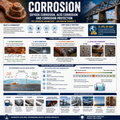

Corrosion Chemistry – Oxygen Corrosion, Acid Corrosion & Corrosion Protection
Corrosion Chemistry – Oxygen Corrosion, Acid Corrosion & Corrosion Protection
Corrosion is one of the most important real-world applications of electrochemistry. Every year, corrosion affects bridges, vehicles, pipelines, industrial equipment, ships, renewable energy systems, and countless engineered structures around the world. Understanding why metals corrode—and how engineers prevent it—helps students connect chemistry to everyday life and modern technology.
This comprehensive High School Chemistry resource introduces students to corrosion as a dynamic electrochemical process. Through scientific investigations, engineering case studies, and inquiry-based activities, students explore oxidation, reduction, electron transfer, galvanic cells, corrosion mechanisms, and advanced corrosion protection technologies.
The interdisciplinary approach connects chemistry with engineering, environmental science, materials science, and sustainability while strengthening scientific reasoning and analytical thinking.
Product Description
Students begin by exploring the fundamental chemistry of corrosion and learn why many metals naturally tend to return to more stable oxidized forms. They investigate oxidation, reduction, electron transfer, electrochemical cells, and the electrochemical series before applying these concepts to authentic corrosion processes.
The unit examines oxygen corrosion and acid corrosion in detail, explaining anodic and cathodic half-reactions, electron flow, electrochemical potentials, and the formation of rust. Students analyze how oxygen, moisture, salts, acids, temperature, and environmental conditions influence corrosion rates and why different metals behave differently.
Additional learning modules introduce galvanic corrosion, pitting corrosion, crevice corrosion, passivation, protective coatings, galvanization, sacrificial anodes, cathodic protection, and corrosion-resistant alloys. Engineering examples demonstrate how corrosion science protects bridges, pipelines, automobiles, offshore structures, buildings, and renewable energy infrastructure.
Inquiry-based investigations, scientific diagrams, laboratory ideas, higher-order thinking questions, and engineering applications encourage students to apply chemistry concepts to authentic real-world problems while developing critical thinking and problem-solving skills.
What's Included
- complete instructional unit
- printable classroom lessons
- student reading passages
- scientific diagrams
- inquiry-based investigations
- engineering case studies
- laboratory activities
- assessment tasks
- higher-order thinking questions
- answer keys
Learning Modules
- Introduction to Corrosion Chemistry
- Electrochemistry
- Redox Reactions
- Oxygen Corrosion
- Acid Corrosion
- Electron Flow
- Galvanic Cells
- Electrochemical Series
- Rust Formation
- Environmental Factors
- Pitting Corrosion
- Crevice Corrosion
- Galvanic Corrosion
- Passivation
- Protective Coatings
- Sacrificial Anodes
- Cathodic Protection
- Engineering Materials
- Industrial Applications
- Sustainable Infrastructure
Students Will Learn To
- explain corrosion as an electrochemical process.
- analyze oxidation and reduction reactions.
- interpret electrochemical series data.
- evaluate engineering corrosion protection methods.
- investigate factors affecting corrosion rates.
- connect chemistry with engineering applications.
- apply scientific reasoning to authentic industrial challenges.
Perfect For
- High School Chemistry
- Honors Chemistry
- AP Chemistry Enrichment
- STEM Education
- Engineering
- Materials Science
- Physical Science
- Applied Chemistry
- Advanced Secondary Science
Why Teachers Love It
Teachers appreciate this resource because it transforms abstract electrochemistry into meaningful real-world learning. Students investigate authentic engineering challenges while strengthening analytical thinking, scientific communication, and problem-solving skills. The ready-to-use lessons reduce preparation time while providing rigorous, inquiry-based STEM instruction that connects chemistry with engineering, sustainability, and modern industry.
FAQ
Which grade levels is this resource designed for?
High School Chemistry, Honors Chemistry, AP Chemistry enrichment, and advanced STEM courses.
Are answer keys included?
Yes. Complete answer keys are provided.
Which corrosion processes are explored?
Students investigate oxygen corrosion, acid corrosion, galvanic corrosion, pitting corrosion, and crevice corrosion.
Does the resource include corrosion protection?
Yes. Students learn about protective coatings, galvanization, passivation, sacrificial anodes, corrosion-resistant alloys, and cathodic protection.
Is this suitable for STEM education?
Absolutely. The unit connects chemistry with engineering, materials science, sustainability, and industrial technology through inquiry-based learning.

$24.99 – Buy now
PDF · Instant Download