

✓ Added to cart
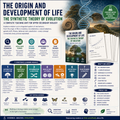

Evolution and the Origin of Life | Synthetic Theory of Evolution
Evolution and the Origin of Life | Synthetic Theory of Evolution
Evolution and the Origin of Life is a no-prep biology unit, with differentiated worksheets, activities, slides and answer keys — print & digital, ready to teach.
How do species evolve? Why do populations change over time? What biological mechanisms drive adaptation and biodiversity?
This comprehensive high school biology unit introduces students to the Synthetic Theory of Evolution through engaging case studies, scientific evidence, genetics, population biology, and evolutionary mechanisms.
Students investigate mutation, recombination, natural selection, genetic drift, fitness, molecular evolution, fossil evidence, and the origin of life while developing scientific reasoning and analytical skills.
Designed for advanced biology classrooms, this resource combines evolutionary biology, genetics, molecular biology, and inquiry-based learning to create a rigorous and engaging educational experience.
What's Included
- Approximately 60 printable pages
- Complete teaching unit
- 7 learning modules
- Synthetic Theory of Evolution
- Natural Selection
- Mutation
- Recombination
- Genetic Drift
- Fitness
- Gene Flow
- Molecular Evolution
- Fossil Evidence
- Evolutionary Genetics
- Origin of Life
- Assessment Preparation
Learning Modules
Module 1 – Introduction to Evolution
- What Is Evolution?
- Darwin and Lamarck
- Population Genetics
- Fossil Evidence
- Molecular Evidence
- Universal Genetic Code
- Origin of Life
Module 2 – Variation and Mutation
- Genetic Variation
- Mutation Types
- Spontaneous and Induced Mutations
- Sickle Cell Anemia
- Industrial Melanism
- Molecular Clock
Module 3 – Recombination and Selection
- Meiosis
- Genetic Recombination
- Natural Selection
- Sexual Selection
- Adaptation
Module 4 – Genetic Drift and Fitness
- Founder Effect
- Bottleneck Effect
- Random Evolutionary Processes
- Fitness Concepts
Module 5 – Behavior and Coevolution
- Behavioral Ecology
- Cost-Benefit Models
- Predator-Prey Relationships
- Coevolution
Modules 6–7 – Reflection and Assessment
- Data Analysis
- Evidence Evaluation
- Scientific Argumentation
- Exam Preparation
Students Will Learn To
Students will learn to:
- explain evolutionary mechanisms,
- analyze biological evidence,
- interpret scientific data,
- evaluate evolutionary theories,
- understand population genetics,
- investigate adaptation processes,
- develop scientific arguments,
- strengthen critical-thinking skills.
Perfect For
- High School Biology
- AP Biology Enrichment
- Evolutionary Biology
- Genetics
- Life Sciences
- Biomedical Science
- Honors Biology
- STEM Education
Why Teachers Love This Resource
✔ comprehensive evolution coverage
✔ strong scientific rigor
✔ real-world biological examples
✔ inquiry-based learning
✔ data analysis integration
✔ assessment-ready lessons
✔ supports scientific literacy
✔ ideal for advanced biology classrooms
✔ aligned with modern biology standards
✔ no-prep printable resource
FAQ
Who is this resource designed for?
Upper secondary and high school biology students studying evolution, genetics, and life sciences.
Does the unit cover natural selection and genetic drift?
Yes. Both mechanisms are explored in detail alongside mutation, recombination, fitness, and gene flow.
Are molecular and fossil evidence included?
Absolutely. Students analyze fossil records, molecular data, the universal genetic code, and evolutionary case studies.
Is this suitable for AP Biology enrichment?
Yes. The scientific depth and analytical focus make it highly suitable for advanced biology programs.
Does the unit include the origin of life?
Yes. Students investigate abiogenesis, early Earth conditions, the RNA World hypothesis, and the foundations of biological evolution.
$24.99 – buy now
PDF · instant download
🔒 Secure checkout · ♾️ reuse every yearFAQ about this resource
More teaching resources

Review: Evolution and the Origin of Life | Synthetic Theory of Evolution
Evolution and the Origin of Life | Synthetic Theory of Evolution is a fully worked-out teaching resource at Teaching Resources level (See description or ask support). Its strength is that it is finished: worksheets, answer keys and teacher notes are all there, so a lesson can start without extra prep.
Teachers covering a topic at short notice, early-career teachers under planning pressure, and anyone picking up a cover lesson — and any situation where a lesson has to be ready today.
An editorial assessment of structure, scope and classroom use. It is not a customer review.