

✓ Added to cart


Music About Music | Musical Quotations, Intertextuality & Sampling
Music Complete – Ready-to-Use Curriculum ... · from $149.90 See bundle →
Music About Music | Musical Quotations, Intertextuality & Sampling
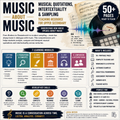
Music About Music is a no-prep music unit, with differentiated worksheets, activities, slides and answer keys — print & digital, ready to teach.
How does music communicate with other music?
Why do composers, songwriters, and producers reference earlier works, styles, and traditions? How do quotations, sampling, and stylistic borrowing create new layers of meaning?
This comprehensive high school teaching unit introduces students to musical quotations and intertextuality as powerful analytical concepts. From nineteenth-century Romanticism to contemporary sampling culture, students explore how music continuously responds to, transforms, and reinterprets earlier musical ideas.
The unit combines music appreciation, music history, cultural studies, critical thinking, and analytical listening in an engaging interdisciplinary format.
What's Included
- 50+ printable pages
- Complete teaching unit
- Seven learning modules
- Musical Quotations
- Intertextuality
- Sampling
- Stylistic Borrowing
- Collage and Montage
- Listening Activities
- Analytical Frameworks
- Comparative Tasks
- Assessment Preparation
Learning Topics
Module 1
- What is a musical quotation?
- Intertextuality
- Listening activities
- Analytical foundations
Module 2
- Direct quotation
- Allusion
- Stylistic quotation
- Sampling
- Collage
- Montage
- Advanced analytical frameworks
Additional Topics
- Nineteenth-century music
- Twentieth-century music
- Twenty-first-century music
- Cultural communication
- Historical context
- Comparative analysis
- Interpretation and evaluation
Students Will Learn To
Students will learn to:
- identify musical quotations,
- analyze stylistic references,
- interpret cultural meanings,
- compare musical works,
- evaluate artistic intentions,
- understand intertextuality,
- connect historical contexts,
- develop analytical writing skills.
Perfect For
- High School Music
- Music Appreciation
- AP Music Theory Enrichment
- Humanities
- Cultural Studies
- Arts Education
- Honors Courses
- Interdisciplinary Learning
Why Teachers Love This Resource
✔ highly engaging topic
✔ bridges classical and contemporary music
✔ strong analytical focus
✔ promotes critical thinking
✔ interdisciplinary design
✔ assessment-ready activities
✔ listening-based learning
✔ real-world relevance
✔ no-prep printable resource
✔ ideal for advanced secondary students
Legal Notice
This educational resource is intended exclusively for academic, historical, cultural, and analytical study purposes. Any references to composers, artists, musical works, styles, or genres are included solely for educational analysis and classroom discussion. No affiliation, endorsement, sponsorship, or commercial relationship with any referenced rights holders, artists, publishers, or organizations is claimed or implied.
FAQ
Who is this resource designed for?
Upper secondary and high school students studying Music, Humanities, Cultural Studies, or Arts Education.
What topics are covered?
Musical quotations, intertextuality, stylistic borrowing, sampling, collage, montage, and cultural communication in music.
Does it include assessment activities?
Yes. The unit includes analytical tasks, listening activities, comparative exercises, and assessment preparation.
Can it be used with modern music examples?
Absolutely. The unit connects historical musical quotation practices with contemporary sampling and production techniques.
$19.99 – buy now
PDF · instant download
🔒 Secure checkout · ♾️ reuse every yearFAQ about this resource
More Music resources for Teaching Resources

Review: Music About Music | Musical Quotations, Intertextuality & Sampling
Music About Music | Musical Quotations, Intertextuality & Sampling is a fully worked-out teaching resource for Music at Teaching Resources level (See description or ask support). Its strength is that it is finished: worksheets, answer keys and teacher notes are all there, so a lesson can start without extra prep.
Teachers covering a topic at short notice, early-career teachers under planning pressure, and anyone picking up a cover lesson — and any situation where a lesson has to be ready today.
An editorial assessment of structure, scope and classroom use. It is not a customer review.