✓ Added to cart!
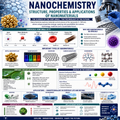

Nanochemistry – Nanomaterials, Surface Properties & Modern Applications
Nanochemistry – Nanomaterials, Surface Properties & Modern Applications
Nanotechnology is transforming medicine, electronics, renewable energy, engineering, and materials science. Understanding how matter behaves at the nanoscale has become one of the most exciting topics in modern chemistry, making nanochemistry an outstanding context for inquiry-based STEM education.
This comprehensive High School Chemistry resource introduces students to the fascinating world of nanomaterials while connecting chemistry, physics, engineering, biology, and materials science through authentic scientific examples and real-world applications.
Students investigate why matter behaves differently when particle sizes shrink to only a few nanometers. They discover how changes in surface area, atomic structure, and quantum effects influence color, electrical conductivity, mechanical strength, chemical reactivity, and optical properties.
Product Description
Beginning with the fundamentals of the nanoscale, students compare atoms, viruses, cells, and nanoparticles before exploring how nanomaterials are synthesized and classified.
The unit introduces graphene, carbon nanotubes, fullerenes, quantum dots, metal nanoparticles, dendrimers, and metal-organic frameworks while emphasizing the relationship between atomic structure and material properties. Learners investigate why identical chemical substances behave differently at the nanoscale and how these discoveries have revolutionized modern science and technology.
Additional learning modules examine surface chemistry, catalysis, adsorption, self-assembly, photocatalysis, colloidal stability, quantum confinement, advanced characterization methods, and nanostructured materials. Students explore applications in targeted drug delivery, medical imaging, renewable energy, environmental remediation, high-performance electronics, sensors, and advanced engineering materials.
Ethical considerations, sustainability, and emerging technologies encourage students to evaluate both the opportunities and challenges of nanotechnology using scientific evidence and critical thinking.
What's Included
- complete instructional unit
- printable classroom lessons
- student reading passages
- scientific diagrams
- classroom investigations
- inquiry-based activities
- higher-order thinking questions
- assessment tasks
- answer keys
- visual learning resources
Learning Modules
- Introduction to Nanochemistry
- Nanomaterials
- Graphene
- Carbon Nanotubes
- Fullerenes
- Quantum Dots
- Metal Nanoparticles
- Dendrimers
- Metal-Organic Frameworks
- Surface Chemistry
- Adsorption
- Catalysis
- Self-Assembly
- Quantum Confinement
- Photocatalysis
- Materials Characterization
- Biomedical Applications
- Environmental Nanotechnology
- Sustainable Engineering
Students Will Learn To
- explain nanoscale structure–property relationships.
- analyze advanced materials scientifically.
- interpret modern chemistry models.
- evaluate emerging technologies.
- investigate interdisciplinary STEM concepts.
- connect chemistry with engineering and physics.
- apply scientific reasoning to real-world innovations.
Perfect For
- High School Chemistry
- Honors Chemistry
- AP Chemistry Enrichment
- STEM Education
- Materials Science
- Engineering
- Advanced Chemistry
- Physical Science
- Interdisciplinary STEM
- College Preparation
Why Teachers Love It
Teachers appreciate this resource because it transforms an advanced scientific topic into engaging, inquiry-based classroom learning. Students explore authentic examples from modern research while strengthening analytical thinking, scientific communication, and evidence-based reasoning. The interdisciplinary approach makes the resource valuable across chemistry, engineering, physics, and STEM programs while significantly reducing lesson preparation time.
FAQ
Which grade levels is this resource designed for?
High School Chemistry, Honors Chemistry, AP Chemistry enrichment, and advanced STEM courses.
Are answer keys included?
Yes. Complete answer keys are provided.
Can this unit be used independently?
Absolutely. It functions as a complete classroom-ready instructional unit.
Which nanomaterials are explored?
Graphene, carbon nanotubes, fullerenes, quantum dots, metal nanoparticles, dendrimers, and metal-organic frameworks.
Is this suitable for STEM education?
Yes. The interdisciplinary approach connects chemistry with engineering, materials science, biology, and physics.

$24.99 – Buy now
PDF · Instant Download