✓ Added to cart!
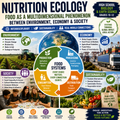

Nutrition Ecology Teaching Resources | Food Systems, Sustainability & Environmental Science | High School Biology
Nutrition Ecology Teaching Resources | Food Systems, Sustainability & Environmental Science | High School Biology
Help students understand how food connects biology, environmental science, economics, sustainability, and society with this comprehensive interdisciplinary teaching resource.
Students investigate food systems using a systems-thinking approach while exploring resource consumption, biodiversity, climate change, ecological footprints, sustainable agriculture, food security, global supply chains, consumer behavior, and economic decision-making through authentic case studies and inquiry-based learning activities.
Product Description
This classroom-ready instructional unit introduces students to Nutrition Ecology, helping them understand how environmental, economic, and social systems interact through food production and consumption.
Students begin by analyzing food systems before investigating natural resource use, water consumption, biodiversity, climate change, ecological footprints, and sustainable agriculture.
The unit also explores global supply chains, food pricing, agricultural subsidies, international trade, food industries, consumer behavior, and sustainability through real-world examples, scientific data, and interdisciplinary investigations.
Modern scientific infographics, differentiated classroom activities, assessments, and complete answer keys provide an engaging learning experience while strengthening systems thinking and evidence-based decision-making.
What's Included
- Complete instructional unit
- Approximately 60 printable pages
- Modern scientific infographics
- Environmental case studies
- Economic case studies
- Systems-thinking activities
- Data analysis investigations
- Differentiated classroom activities
- Assessments
- Complete answer keys
Learning Topics
- Nutrition ecology
- Food systems
- Sustainability
- Climate change
- Biodiversity
- Ecological footprints
- Sustainable agriculture
- Resource consumption
- Global supply chains
- Food security
- Consumer behavior
- Agricultural economics
- Environmental science
- Systems thinking
Students Will Learn To
- analyze interconnected food systems.
- evaluate environmental impacts of nutrition.
- interpret scientific and economic data.
- compare sustainable agriculture approaches.
- assess food security challenges.
- explain global supply chains.
- strengthen systems-thinking and critical-thinking skills.
Perfect For
- High School Biology
- Environmental Science
- Sustainability
- Human Geography
- Health Science
- Economics
- Social Studies
- STEM Education
- Grades 10–12
Why Teachers Love This Resource
This interdisciplinary teaching resource combines Biology, Environmental Science, Sustainability, Geography, Economics, and Social Studies into one engaging curriculum. Students connect scientific concepts with real-world environmental and economic challenges while developing analytical thinking and evidence-based decision-making skills.
Related TeachLessons.us Resources
- Global & Regional Nutrition Challenges
- Diabetes Mellitus & Obesity
- Plant-Based Food Business Strategies
- Principles of a Balanced Diet
- Nutrition Across Life Stages
- Human Nutrition & Metabolism Bundle
FAQ
Which grades is this resource designed for?
Grades 10–12 for High School Biology, Environmental Science, Sustainability, Geography, Economics, and interdisciplinary STEM courses.
Does the resource include real-world case studies?
Yes. Students investigate authentic environmental, economic, and societal examples related to food systems and sustainability.
Are answer keys included?
Yes. Complete answer keys are included for all classroom activities and assessments.
$24.99 – Buy now
PDF · Instant Download