✓ Added to cart!
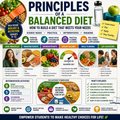

Principles of a Balanced Diet - High School Unit
Principles of a Balanced Diet - High School Unit
Healthy nutrition is about much more than counting calories. A balanced diet requires the right combination of energy intake, macronutrients, micronutrients, metabolism, and evidence-based meal planning that adapts to individual needs and lifestyles. This comprehensive instructional unit helps students understand the biological foundations of nutrition through engaging investigations and authentic real-world applications.
Designed for Grades 9–12, this resource integrates Biology, Human Physiology, Nutrition, and Health Science while promoting scientific literacy, inquiry-based learning, and evidence-based decision-making.
Product Description
Students begin by exploring the core principles of healthy nutrition, investigating energy requirements, nutrient balance, dietary diversity, and evidence-based dietary recommendations.
The unit then examines carbohydrates, fats, proteins, vitamins, and minerals, explaining how each nutrient supports metabolism, growth, immune function, cellular activity, and overall human health.
Students investigate energy balance by calculating Basal Metabolic Rate (BMR), Total Energy Expenditure, and Physical Activity Level (PAL), allowing them to understand how nutritional needs differ depending on age, activity level, and lifestyle.
A major focus of the curriculum is practical meal planning. Students apply the Plate Method to design balanced meals, compare dietary patterns, evaluate nutritional quality, and solve authentic health scenarios using scientific evidence.
Modern scientific diagrams, comparison charts, inquiry-based investigations, differentiated classroom activities, nutrition planning exercises, assessments, and complete answer keys make this resource ideal for rigorous secondary science instruction.
What's Included
- Complete instructional unit
- Approximately 60 printable pages
- Modern scientific diagrams
- Nutrition planning activities
- Inquiry-based investigations
- Meal-planning exercises
- Authentic case studies
- Comparison charts
- Assessments
- Complete answer keys
Learning Modules
- Healthy Eating Principles
- Energy Balance
- Basal Metabolic Rate (BMR)
- Physical Activity Level (PAL)
- Carbohydrates
- Fats
- Proteins
- Vitamins
- Minerals
- Macronutrients
- Micronutrients
- Metabolism
- Meal Planning
- Plate Method
- Human Physiology
Students Will Learn To
- explain the scientific principles of healthy nutrition.
- analyze energy requirements.
- calculate energy expenditure.
- compare dietary patterns using scientific evidence.
- create balanced meal plans.
- evaluate nutritional recommendations critically.
- strengthen scientific reasoning and health literacy.
Perfect For
- High School Biology
- Nutrition
- Human Physiology
- Anatomy & Physiology
- Health Science
- Honors Biology
- STEM Education
- Grades 9–12
Why Teachers Love It
This comprehensive curriculum combines nutrition science, biology, and human physiology in one engaging resource. Students investigate authentic health questions, calculate energy needs, develop practical meal plans, and strengthen scientific literacy through inquiry-based learning and real-world applications.
FAQ
Which grade levels is this resource designed for?
Grades 9–12, including High School Biology, Nutrition, Human Physiology, Anatomy & Physiology, and Health Science.
Do students calculate energy requirements?
Yes. Students calculate Basal Metabolic Rate (BMR), Physical Activity Level (PAL), and total energy expenditure while applying these concepts to authentic scenarios.
Does the resource include practical meal planning?
Yes. Students use evidence-based nutrition principles and the Plate Method to develop balanced meal plans and evaluate dietary choices.
Are answer keys included?
Yes. Complete answer keys are included for all instructional activities and assessments.

$24.99 – Buy now
PDF · Instant Download