✓ Added to cart!
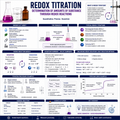

Redox Titration | Quantitative Chemical Analysis & Stoichiometry | High School Chemistry STEM Unit
Redox Titration | Quantitative Chemical Analysis & Stoichiometry | High School Chemistry STEM Unit
Why does water boil at a much higher temperature than hydrogen sulfide? Why are some substances highly soluble while others repel water completely? Why do metals conduct electricity while ionic solids are brittle? These questions all have the same scientific foundation: intermolecular and intramolecular forces.
This comprehensive High School Chemistry resource provides students with a complete understanding of how molecular interactions determine the physical and chemical properties of matter. Students learn how bonding within particles differs from attractive forces between molecules and how these interactions explain boiling points, melting points, conductivity, solubility, and countless everyday observations.
The unit combines physical chemistry, inorganic chemistry, organic chemistry, and materials science in a highly visual and inquiry-based learning experience. Through authentic scientific examples, molecular models, investigations, and real-world applications, students develop a deep conceptual understanding of structure-property relationships while strengthening analytical thinking and scientific reasoning.
Product Description
Students begin by distinguishing between intramolecular bonds and intermolecular forces before exploring why both types of interactions are essential for understanding matter.
The instructional sequence introduces covalent bonding, ionic bonding, and metallic bonding while examining their atomic structure, bond formation, energetic stability, and resulting material properties. Students compare different bonding models and investigate how these interactions influence conductivity, hardness, melting point, and crystal structure.
The unit then focuses on intermolecular attractions, including London dispersion forces, dipole-dipole interactions, and hydrogen bonding. Students analyze how molecular size, polarity, and geometry influence intermolecular attraction and explain familiar observations such as water's unusually high boiling point, surface tension, and solubility.
Additional lessons introduce electronegativity, molecular geometry, VSEPR theory, dipole moments, and polarity. Learners investigate how molecular shape influences overall polarity and use scientific models to predict physical properties.
Finally, students apply their knowledge to authentic examples from biology, engineering, environmental science, pharmaceuticals, and materials science. Inquiry-based investigations, scientific diagrams, critical-thinking activities, and higher-order application tasks make this resource ideal for rigorous STEM instruction.
What's Included
- complete instructional unit
- printable classroom lessons
- student reading passages
- scientific diagrams
- inquiry investigations
- molecular modeling activities
- assessment tasks
- higher-order thinking questions
- answer keys
- classroom-ready worksheets
Learning Modules
- Intramolecular Bonding
- Intermolecular Forces
- Covalent Bonding
- Ionic Bonding
- Metallic Bonding
- Electronegativity
- Molecular Geometry
- VSEPR Theory
- Molecular Polarity
- Dipole Moments
- London Dispersion Forces
- Dipole-Dipole Forces
- Hydrogen Bonding
- Structure-Property Relationships
- Physical Properties of Matter
- Solubility
- Boiling & Melting Points
- Materials Science Applications
Students Will Learn To
- distinguish intermolecular and intramolecular interactions.
- explain physical properties using molecular models.
- predict molecular polarity.
- analyze molecular geometry.
- interpret structure-property relationships.
- evaluate intermolecular attractions.
- apply chemistry concepts to real-world STEM contexts.
Perfect For
- High School Chemistry
- Honors Chemistry
- AP Chemistry Enrichment
- STEM Education
- Physical Science
- Materials Science
- Engineering
- Advanced Secondary Science
Why Teachers Love It
Teachers appreciate this resource because it transforms abstract molecular interactions into meaningful scientific understanding. Students connect molecular models with observable physical properties while developing inquiry skills, analytical reasoning, and higher-order scientific thinking. The ready-to-use lessons reduce preparation time while supporting rigorous chemistry instruction and advanced STEM learning.
FAQ
Which grade levels is this resource designed for?
High School Chemistry, Honors Chemistry, AP Chemistry enrichment, and advanced STEM courses.
Are answer keys included?
Yes. Complete answer keys are included.
Which intermolecular forces are covered?
London dispersion forces, dipole-dipole interactions, and hydrogen bonding.
Does the unit include molecular geometry?
Yes. Students investigate VSEPR theory, electronegativity, polarity, and dipole moments.
Is this resource suitable for AP Chemistry enrichment?
Absolutely. The conceptual depth and inquiry-based approach make it an excellent enrichment resource for advanced chemistry students.

$24.99 – Buy now
PDF · Instant Download