

✓ Added to cart
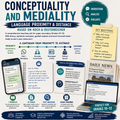

Conceptuality and Mediality – Koch & Oesterreicher's Language Proximity & Distance Teaching Unit
Conceptuality and Mediality – Koch & Oesterreicher's Language Proximity & Distance Teaching Unit
Introduce students to one of the most influential linguistic models in upper secondary education with this comprehensive 47-page printable teaching unit.
Based on the work of Peter Koch and Wulf Oesterreicher, students explore the relationship between mediality, conceptuality, and language proximity and distance through authentic communication examples, guided analysis, and engaging classroom activities.
Students learn why spoken language is not always informal and written language is not always formal. Using chats, emails, conversations, speeches, newspaper articles, and additional authentic texts, they classify communication along the proximity–distance continuum while applying academic linguistic terminology.
Organized into 7 structured instructional modules, the resource progresses from theoretical foundations to authentic language analysis and concludes with comprehensive exam preparation and assessment materials.
What's Included
- 47 printable pages
- Complete teaching unit
- 7 instructional modules
- Ready-to-use lessons
- Theory summaries
- Authentic communication examples
- Guided analysis activities
- Graphic organizers
- Reflection exercises
- Comparison tasks
- Higher-order thinking activities
- Exam preparation
- Assessment with answer guidance
- Print-ready PDF
Learning Sections
Students explore:
- Conceptuality
- Mediality
- Koch & Oesterreicher Model
- Language Proximity
- Language Distance
- Communication Conditions
- Language Variation
- Chat Language
- Messaging Communication
- Email Communication
- Conversation Analysis
- Spoken vs. Written Language
- Linguistic Features
- Text Analysis
- Communication Strategies
Students Will Learn To
Students will learn to:
- distinguish conceptuality from mediality
- classify communication situations
- analyze authentic texts
- compare spoken and written communication
- identify linguistic features
- apply linguistic terminology
- evaluate communication strategies
- strengthen analytical writing
- prepare for upper secondary examinations
Perfect For
- Grades 10–12
- High School Language Arts
- Linguistics
- Communication Studies
- Media Literacy
- Advanced Language Analysis
- Exam Preparation
- Upper Secondary Classrooms
- Print-and-Teach Lessons
Why Teachers Love This Resource
✔ Comprehensive and classroom-ready
✔ No additional preparation required
✔ Clear progression from theory to application
✔ Authentic classroom examples
✔ Excellent for linguistics instruction
✔ Promotes analytical and critical thinking
✔ Supports academic writing
✔ Ideal for exam preparation
✔ Flexible for independent, partner, and whole-class work
FAQ
Which grades is this resource designed for?
Grades 10–12 (Upper Secondary).
How many pages are included?
The unit includes 47 printable pages organized into seven instructional modules.
Does it include assessment materials?
Yes. The resource concludes with exam preparation and an assessment including answer guidance.
Can it be taught without additional preparation?
Absolutely. Everything is ready to print and teach.
Which topics are covered?
Students study conceptuality, mediality, language proximity and distance, communication conditions, language variation, authentic text analysis, and linguistic communication models.
Is this suitable for exam preparation?
Yes. It is specifically designed to support upper secondary assessments and advanced linguistic analysis.
$24.99 – buy now
PDF · instant download
🔒 Secure checkout · ♾️ reuse every yearFAQ about this resource
More teaching resources



Review: Conceptuality and Mediality – Koch & Oesterreicher's Language Proxi...
Conceptuality and Mediality – Koch & Oesterreicher's Language Proximity & Dis... is a fully worked-out teaching resource at High School level (Grades 10–12). Its strength is that it is finished: worksheets and teacher notes are all there, so a lesson can start without extra prep.
Teachers covering a topic at short notice, early-career teachers under planning pressure, and anyone picking up a cover lesson — and any situation where a lesson has to be ready today.
An editorial assessment of structure, scope and classroom use. It is not a customer review.