

✓ Added to cart
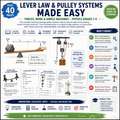


Lever Law & Pulley Systems Worksheets for Grades 7–9
Physics Complete – Ready-to-Use Curriculu... · from $149.90 See bundle →
Lever Law & Pulley Systems Worksheets for Grades 7–9
Master Lever Law & Pulley Systems Through Real-World Physics
Make one of the most important mechanics topics engaging, practical and easy to understand.
This comprehensive printable physics resource helps students develop a deep understanding of lever law, torque, pulley systems and mechanical advantage through structured lessons, real-world engineering examples, hands-on experiments and challenging problem-solving activities.
Instead of memorizing formulas, students investigate how simple machines work in everyday life. They calculate torque, compare different lever types, analyze pulley systems and discover why engineers use these principles in cranes, construction equipment, elevators, tools and countless modern technologies.
Designed for Grades 7–9, this ready-to-use resource combines conceptual understanding, mathematical calculations, scientific inquiry and engineering applications into one complete classroom package.
What's Included
⚙️ 40+ printable pages
📖 Complete teaching unit
🔬 Hands-on experiments
🧮 Calculation exercises
📊 Diagrams & illustrations
⚖️ Lever Law
💪 Torque calculations
🪢 Fixed & movable pulleys
🏗 Mechanical Advantage
⚙️ Simple Machines
🏗 Engineering applications
📋 Laboratory activities
📝 Practice worksheets
🎯 Higher-order thinking tasks
📚 Review activities
✅ Exam preparation
Learning Units
Unit 1 – Understanding Levers
-
What is a lever?
-
Lever types
-
Fulcrum
-
Load
-
Effort
-
Lever arms
-
Everyday examples
Unit 2 – Lever Law
-
Understanding equilibrium
-
Calculating torque
-
Solving equations
-
Balancing forces
-
Mathematical reasoning
-
Worked examples
Unit 3 – Scientific Investigations
-
Classroom experiments
-
Collecting measurements
-
Recording observations
-
Data analysis
-
Scientific reasoning
-
Laboratory reports
Unit 4 – Pulley Systems
-
Fixed pulleys
-
Movable pulleys
-
Compound pulley systems
-
Mechanical advantage
-
Force calculations
-
Distance calculations
-
Efficiency
Unit 5 – Engineering in Everyday Life
Students explore how simple machines are used in:
-
Construction cranes
-
Elevators
-
Wheelbarrows
-
Bottle openers
-
Pliers
-
Scissors
-
Wrenches
-
Industrial lifting systems
Unit 6 – Assessment & Review
-
Review exercises
-
Challenge problems
-
Transfer tasks
-
Exam-style questions
-
Complete assessment preparation
Students Will Learn To
✔ Explain the lever law confidently
✔ Calculate torque accurately
✔ Identify different classes of levers
✔ Solve pulley system problems
✔ Apply mechanical advantage
✔ Conduct scientific investigations
✔ Interpret experimental data
✔ Connect physics concepts to real engineering applications
✔ Strengthen mathematical reasoning
✔ Prepare successfully for classroom assessments
Perfect For
✅ Physics
✅ Grades 7–9
✅ STEM Education
✅ Engineering
✅ Middle School Science
✅ Homeschool
✅ Laboratory Activities
✅ Printable Classroom Resources
✅ Exam Review
Why Teachers Love This Resource
Students often struggle to connect physics formulas with real life.
This resource bridges that gap by combining engaging experiments, engineering examples and structured problem-solving activities that make mechanics meaningful and accessible. Every lesson encourages students to investigate, calculate, explain and apply scientific concepts while building lasting conceptual understanding.
Whether used as a complete teaching unit, individual lesson resource or exam review package, this printable workbook saves preparation time while delivering highly engaging physics instruction.
FAQ
Which grade levels is this resource designed for?
The resource is ideal for Grades 7–9 and aligns well with middle school physics curricula.
What topics are covered?
Students learn about lever law, torque, equilibrium, pulley systems, mechanical advantage, simple machines and real-world engineering applications.
Are experiments included?
Yes. Multiple hands-on investigations guide students through scientific observation, measurement, data collection and analysis.
Does the resource include calculations?
Absolutely. Students solve numerous torque, force and pulley calculations with increasing levels of complexity.
Is this suitable for STEM education?
Yes. The resource integrates physics, mathematics, engineering and scientific inquiry, making it ideal for STEM classrooms.
Can this be used for exam preparation?
Yes. The workbook concludes with comprehensive review exercises, transfer tasks and exam-style questions to reinforce learning before assessments.
$14.99 – buy now
PDF · instant download
🔒 Secure checkout · ♾️ reuse every yearFAQ about this resource
More Physics resources for Cross-Grade Resources
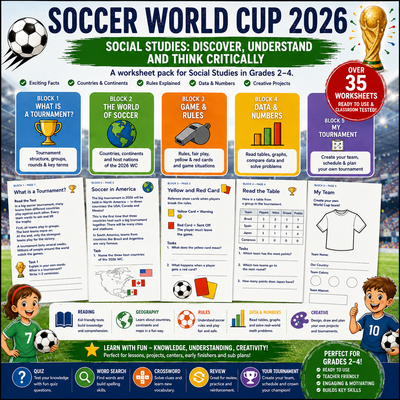

Review: Lever Law & Pulley Systems Worksheets for Grades 7–9
Lever Law & Pulley Systems Worksheets for Grades 7–9 is a fully worked-out teaching resource for Physics at Cross-Grade Resources level (Grades 7–9). Its strength is that it is finished: worksheets and teacher notes are all there, so a lesson can start without extra prep.
Teachers covering a topic at short notice, early-career teachers under planning pressure, and anyone picking up a cover lesson — and any situation where a lesson has to be ready today.
An editorial assessment of structure, scope and classroom use. It is not a customer review.