

✓ Added to cart

Pathophysiology of Nutrition - High School Unit
Pathophysiology of Nutrition - High School Unit
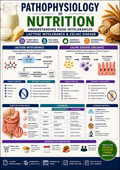
Pathophysiology of Nutrition is a no-prep Biology unit for Grades 10-12, with differentiated worksheets, activities, slides and answer keys — print & digital, ready to teach.
Students begin by investigating the digestive system, enzyme function, nutrient absorption, and the specialized structure of the small intestine. They learn how digestive enzymes break down nutrients and why intestinal villi are essential for efficient absorption.
The second section explores lactose intolerance in depth. Students examine lactase deficiency, lactose digestion, bacterial fermentation, osmotic diarrhea, symptom development, hydrogen breath testing, and evidence-based dietary management strategies. Real-world patient scenarios encourage students to apply biological concepts to authentic health situations.
Students then investigate celiac disease as an autoimmune disorder. They analyze gluten, gliadin, immune activation, villous atrophy, nutrient malabsorption, diagnostic testing, and lifelong dietary treatment while comparing autoimmune diseases with enzyme deficiencies.
The unit concludes with comparative analyses, scientific case studies, inquiry-based investigations, modern diagrams, differentiated classroom activities, assessments, and complete answer keys that promote deep understanding of nutrition, physiology, and medicine.
What's Included
- Complete instructional unit
- Approximately 60 printable pages
- Modern scientific diagrams
- Medical case studies
- Inquiry-based investigations
- Diagnostic activities
- Differentiated classroom tasks
- Assessments
- Complete answer keys
Learning Modules
- Digestive System
- Digestive Enzymes
- Small Intestine
- Nutrient Absorption
- Lactose Intolerance
- Lactase
- Hydrogen Breath Test
- Celiac Disease
- Gluten
- Gliadin
- Autoimmune Disease
- Intestinal Villi
- Nutrition
- Human Physiology
- Pathophysiology
Students Will Learn To
- explain digestive physiology.
- analyze the biological mechanisms of food intolerances.
- distinguish enzyme deficiencies from autoimmune diseases.
- interpret medical diagrams and clinical case studies.
- evaluate diagnostic methods using scientific evidence.
- develop evidence-based dietary recommendations.
- strengthen critical-thinking and scientific reasoning skills.
Perfect For
- High School Biology
- Human Physiology
- Anatomy & Physiology
- Nutrition
- Health Science
- Honors Biology
- STEM Education
- Grades 10–12
Why Teachers Love It
This engaging curriculum combines biology, physiology, immunology, and nutrition into one classroom-ready resource. Students investigate authentic medical case studies while developing a deep understanding of digestive physiology, autoimmune disease, nutrient absorption, and evidence-based healthcare through inquiry-driven learning.
Related TeachLessons.us Resources
- Principles of a Balanced Diet
- Nutrition Across Life Stages
- Macronutrients: Carbohydrates, Fats & Proteins
- Vitamins & Minerals
- Physiological & Metabolic Adaptations
- Photosynthesis
FAQ
Which grade levels is this resource designed for?
Grades 10–12, including High School Biology, Human Physiology, Anatomy & Physiology, Nutrition, and Health Science.
Which disorders are included?
Students investigate lactose intolerance and celiac disease while comparing enzyme deficiencies, autoimmune mechanisms, diagnosis, and dietary treatment.
Does the resource include medical case studies?
Yes. Students analyze authentic clinical scenarios, interpret diagnostic tests, compare disease mechanisms, and develop evidence-based dietary recommendations.
Are answer keys included?
Yes. Complete answer keys are included for all classroom activities and assessments.
$24.99 – buy now
PDF · instant download
🔒 Secure checkout · ♾️ reuse every yearFAQ about this resource
More Nutrition & Food resources for High School
Review: Pathophysiology of Nutrition - High School Unit
Pathophysiology of Nutrition - High School Unit is a fully worked-out teaching resource for Nutrition & Food at High School level (Grades 9–12). Its strength is that it is finished: worksheets, answer keys and teacher notes are all there, so a lesson can start without extra prep.
Teachers covering a topic at short notice, early-career teachers under planning pressure, and anyone picking up a cover lesson — and any situation where a lesson has to be ready today.
An editorial assessment of structure, scope and classroom use. It is not a customer review.