Washington Middle School Science: Lab Routines for the Short Weeks

In a short, interrupted stretch, the best lab plan for a Washington middle school science class is two simple practicals, each preceded by a safety reset. Run the first in the week after Thanksgiving and the second in mid-December, and keep the days in between for data analysis and explanation. Fewer, shorter labs with a clear routine give you more learning than a crowded schedule that falls apart when a day disappears.
Reset the routine before you reset the content
Labs break down in December for the same reason they break down in September: the routine has faded. After a long weekend, students forget where the goggles are, who collects the materials and what to do with a spill. Spend ten minutes at the start of the first lab session on the routine itself, and write the three rules you care about most on the board.
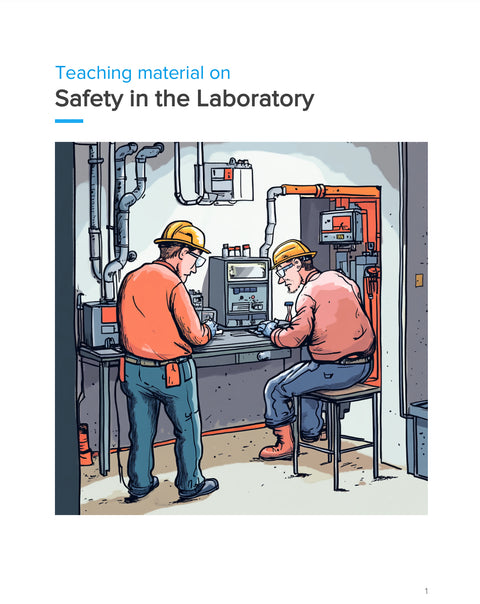
A short safety workbook can carry this reset. The Laboratory Safety workbook is a single resource whose title lists classroom rules, hazards and emergency procedures, and it is written for Grades 5 to 9, so it fits a middle school science room. Read the product description before you use it and take only the pages that match your room and your equipment.
Two practicals that fit the calendar
Thanksgiving falls on Thursday 26 November, and many districts close from Wednesday to Friday or for the whole week. Winter break usually starts around 18 to 23 December. Count the days that actually have students in the room, then choose practicals that need one or two sessions each.
- A closed-container weigh-before-and-after, which tests the idea that mass disappears when something dissolves or reacts. Students predict, measure and explain in one sentence using the word particle.
- A simple machines investigation, where students predict and measure the force needed to lift a load with and without a lever.
Both can be repeated by a class that missed the first session, because the equipment is small and the measurements are quick. Use your district pacing guide and your state's academic standards to decide which strands the practicals support.
Explaining beats tidying
The most useful thing a student can produce after a practical is an explanation, not a neat table. Ask for a claim, one measurement that supports it and a reason that links the two. Grade the reason and give a completion check for the table. A student who can say why mass stayed the same has understood the particle model, whatever the table looks like. A sentence starter helps: "The mass stayed the same because the particles..." Students finish it with their own measurement.
For the days around the labs, a ready sequence lets you teach without writing every lesson. The Chemistry Complete curriculum for Grades 6-8 is a ready-to-use curriculum that can supply the surrounding lessons, and you can take a few of them instead of the whole program. If your focus is forces and machines, the same idea applies to the Physics Complete curriculum on the linked page.
Keep the grading small
Choose one practical write-up per class to grade in depth, and decide in advance what the rest receive. Return the graded work in the final week, when students will read it. The Teach-Life-Balance course is aimed at this kind of workload decision, including how much to grade and when.
Related reading on this site
If your class is also working with simple machines, this piece on lever law and pulley systems activities gives classroom ideas for the same topic. For older students, high school chemistry final exam review shows how a review plan can be structured. The Washington Thanksgiving to winter break page collects the calendar, the weekly table and the linked resources.
Every resource is built around the curriculum you teach – and if something doesn't fit your standards, the TeachLessons Guarantee applies: we adapt it for you.
Frequently asked questions
How many labs should I plan between Thanksgiving and winter break?
Two is a realistic number for most classes. Each one should need a single session for the practical and a second for the explanation.
What if a lab day falls on a half day or an assembly?
Keep a data-analysis lesson in reserve. Students can work with class data from the first session, so the lesson is not lost.
Is the Laboratory Safety workbook suitable for Grade 8?
The product page lists Grades 5 to 9. Read the description and compare it with your equipment and your school rules, and ask us to adapt it if you need a different level.
Want a ready-to-teach curriculum?Complete, ready-to-use teaching curricula for Middle & High School — structured units, assessments, and more.
All Middle School Curricula →Teaching High School classes?Complete, ready-to-use teaching curricula for Middle & High School — structured units, assessments, and more.
All High School Curricula →FAQ about TeachLessons resources
TeachLessons provides K–12 resources. Complete Curriculum packages currently focus on Middle School and High School, while the blog also supports Elementary teachers.
Each package includes lesson plans, worksheets, assessments, rubrics, and teacher notes as print-ready PDFs.
Yes. Resources align with relevant US standards such as Common Core, NGSS, and the NCSS C3 Framework.
Yes. Complete Curriculum packages currently focus on Middle and High School, while our blog supports Elementary teachers with lesson ideas, classroom strategies, cross-curricular activities, free downloads, and Teach-Life-Balance support.
- Blog articles with practical lesson ideas
- Free resources via the newsletter
- Teach-Life-Balance for teachers at every level
The Teach-Life-Balance course is a time-saving programme for Elementary, Middle, and High School teachers. It helps with lesson planning, marking, admin, routines, boundaries, and workload management.
It includes a teacher planner, guides, templates, and practical strategies. Available at teachlessons.us/products/teach-life-balance.
After purchase you receive an instant email with your download link. Files are also stored in your customer account under Orders. Materials are print-ready PDFs for class, projection, or digital use.
Resources are licensed for personal classroom use. You may use them in your own classes. Sharing digital files or uploading them online is not permitted under a single-user licence. School licences are available on request.
Yes. Although primarily aligned to US standards, the lesson structures and subject content work well for UK and Australian classrooms with minor adaptation. The store supports GBP and AUD currency.
You might also like
Lesson ideas straight to your inbox.
Sign up and get a free starter resource pack plus weekly lesson ideas — no fluff, just things that work in real classrooms.
Almost there, !
Check your inbox and click the confirmation link to receive your free pack.

Comments
No comments yet — be the first to share your thoughts!
Leave a comment
Comments are reviewed before being published.
Thanks for your comment!
Your comment is being reviewed and will appear here shortly.